


WWE Champions: Wrestling RPG
Scopely
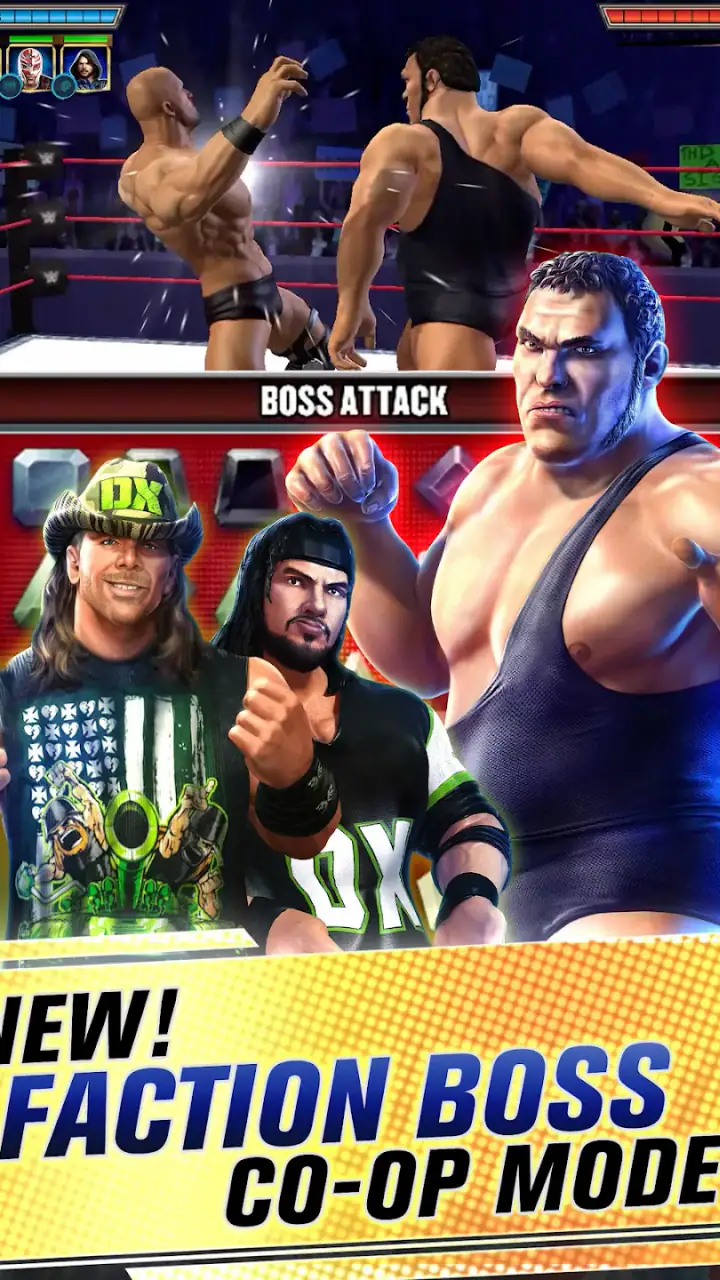
I approached WWE Champions: Wrestling RPG as the sort of game that can quietly become a shared household habit. One person may start a match while waiting for dinner, another may recognize a favorite wrestler and want to see the roster, and someone else may simply enjoy the bright, exaggerated presentation. It is a free role-playing game from Scopely, built around WWE characters, team building, and turn-based wrestling-inspired battles rather than a traditional console-style wrestling simulation.
That distinction matters immediately. I did not find a game focused on precise grappling controls, long entrances, or recreating a full televised match from bell to bell. Instead, the appeal comes from collecting performers, improving them, choosing attacks, and making decisions about when to spend resources. The store summary describes collecting superstars, causing mayhem, and competing for the top title, but the practical experience is more strategic than that wording suggests. You are managing a roster as much as you are playing individual fights.
It is available free of charge, although optional purchases range from $0.99 to $399.99 per item. That wide purchase range is important for anyone sharing a device or allowing a younger player to use it. The game is rated Teen, and I would treat that age guidance as a useful starting point for a household conversation rather than something to ignore simply because the presentation is colorful.
Related News

How WWE Champions fits into a shared household
A game that works in short turns, but still rewards planning
One reason this game fits shared-device use better than many long-form role-playing titles is that a player can make progress in relatively brief sessions. I could pick it up, review the roster, play a few encounters, and put it down without needing an uninterrupted evening. That makes it suitable for a phone or tablet that moves between people, provided everyone agrees on whose account and progress they are using.
The catch is that the game is not equally satisfying when treated as a completely casual button-tapping experience. Its central loop asks me to think about which superstar to develop, which attacks to use, and how the available board or match decisions affect the next turn. A child might enjoy the visual action first, while an older player may become more interested in roster construction and resource management. Those are different ways to enjoy the same game, but they can also create friction if one person spends shared resources without understanding their long-term value.
Related News
Instagram Is No Longer a Photo App. It Is an Attention Engine

Microsoft Teams Mobile: When Collaboration Becomes Navigation

How the NFL App Adapts to Android and iOS Updates
Temu: Elevate Your Shopping Experience to Billionaire Status
Why Traffic Rider Works Best as a Precision Reflex Game

How Google’s Find Hub Transforms Everyday Searches
My practical advice is to decide before playing whether the device is hosting one shared save or whether each person should use a separate account arrangement supported by the platform. I would not assume that progress, purchases, or roster decisions can be cleanly separated just because several people use the same phone. The safest household routine is simple: one person controls the main profile, and other players treat their turns as supervised play unless separate profiles have been deliberately arranged.
Why the roster is the real center of the experience
The wrestling license gives the game its personality, but collecting and improving superstars is what keeps me returning. A new character is not merely a different costume or name; it changes the options available when building a team and approaching a fight. That creates a useful decision for families: do you chase a favorite performer because you enjoy using that character, or do you invest in the wrestler who better fills a practical role in your current roster?
I found that this choice is more interesting than simply picking the strongest-looking character. A favorite may be satisfying to use, but a balanced group can be more useful when the game begins asking for different approaches. I recommend resisting the urge to upgrade every new addition immediately. Concentrating resources on a small group makes it easier to understand what each wrestler contributes and avoids leaving the whole roster underdeveloped.
Gallery
This is one of the less obvious lessons for a new player: collecting broadly and upgrading wisely are not the same thing. The excitement of unlocking someone new can encourage scattered spending, while steady progress usually benefits from a clearer plan. In a shared household, that is also where coordination matters most. If two players are both making independent upgrade decisions, the roster can become expensive to maintain without becoming noticeably stronger.
What the battles feel like in practice
The combat is presented as a role-playing system with wrestling flavor, not as a direct-control fighting game. I make choices that influence attacks and momentum, then watch those decisions play out through the game’s animated presentation. That design is approachable for players who do not enjoy complex action controls, and it gives the game a slower, more thoughtful rhythm than a conventional arcade wrestling title.
For me, the enjoyable part is weighing immediate damage against a setup that may produce a better turn later. The best move is not always the one that looks most dramatic. I started paying closer attention to how a sequence of decisions could create a stronger follow-up, especially when an opponent was close to turning the match around. That small shift—from reacting to every turn to planning a short sequence—is where the role-playing identity becomes clear.
There is a trade-off, though. Anyone looking for the physical feel of timing a grapple, countering a strike, or freely moving around a ring may find the system too indirect. WWE Champions is better suited to someone who likes building a team and making tactical selections than to a player who wants a wrestling simulator. If that distinction is understood before downloading, the game is much easier to judge fairly.
Coordination on a shared phone or tablet
In a realistic household scenario, imagine a parent letting a teenager use the tablet after school while another family member plays later in the evening. The most useful arrangement would be to agree on a roster plan: one person handles upgrades, another can play ordinary matches, and nobody spends premium currency without asking. Even if the game feels free at first, the presence of optional purchases makes that boundary worth setting before enthusiasm takes over.
I would also keep a quick note of which superstars are being developed and what the next goal is. That may sound overly organized for a mobile game, but it prevents the common shared-device problem where every player repeats the same early decisions or consumes materials that someone else was saving. A short conversation after each session can be enough: what was unlocked, what was upgraded, and what should be left untouched.
Coordination is especially helpful because the game encourages a feeling of collection. A player may want to open every reward immediately, while another may prefer to save resources for a particular roster direction. Neither approach is automatically wrong, but they lead to different results. I enjoyed the game more once I treated rewards as part of a plan rather than as permission to spend everything as soon as it appeared.
Account boundaries and purchase awareness
The free entry point makes it easy to try, but households should not confuse free installation with a completely cost-free environment. The listed in-app purchase range reaches from small optional items to purchases priced at $399.99 per item. I would therefore check the device’s purchase protections and make sure the person playing understands that virtual currency and bundles can have real financial consequences.
This is not a criticism unique to this title; it is a practical concern with any collection-focused mobile role-playing game. Here it deserves extra attention because the roster can make spending feel emotionally justified. Unlocking a recognizable superstar or strengthening a favorite character can feel like a personal achievement, which makes an impulsive purchase easier to rationalize. My recommendation is to establish a household rule that all purchases require the account holder’s permission, not merely the device user’s approval.
Shared use also raises a quieter issue: progress has value even when no money is involved. If one person resets a plan, uses scarce upgrade materials, or changes the roster without telling anyone, the next player may feel that their work has been undone. A single primary player is the cleanest solution. If that is not practical, everyone should accept that the save is communal and avoid treating it as a private campaign.
Age context and trust
The Teen content rating should be taken seriously when deciding who can play. The game’s colorful WWE presentation may look accessible, but the rating is a reminder that visual style alone is not a complete guide to suitability. I would introduce it to an older child or teenager with a brief explanation of the purchase system and the difference between fictional wrestling drama and real-world behavior.
I would also pay attention to how a younger player responds to the collection loop. Some children can enjoy unlocking characters without feeling pressure to obtain every possible item. Others may become frustrated when progress slows or when a desired superstar does not arrive quickly. In that situation, the issue is not whether the game is “good” or “bad”; it is whether the player can handle delayed rewards without asking for repeated purchases.
For a trusted teenager, the game can be a reasonable shared activity because it offers more to discuss than simple action. We could compare roster choices, explain why one upgrade was more useful than another, and plan a stronger team for the next challenge. For a younger child who mainly wants immediate wrestling action, I would lean toward a simpler game with more direct controls and fewer collection decisions.
Progression, patience, and the cost of mistakes
The most important skill I developed was learning not to treat every reward as equally valuable. Early excitement can hide the fact that a roster becomes harder to manage when upgrades are spread too thinly. I recommend choosing a small core of dependable wrestlers, learning how their attacks work, and expanding only after that group feels comfortable.
Another useful habit is to pause before committing resources after an exciting unlock. Give the new character a chance to show whether they genuinely fit the team. A superstar can be appealing because of recognition alone, but the best choice for a particular match may be the wrestler whose abilities complement the rest of the group. This is a concrete advantage for experienced players and a gentle lesson in planning for newcomers.
The downside is that collection-driven progression can feel repetitive if you are not interested in long-term roster improvement. Players who want every match to deliver a fresh mechanical challenge may prefer a premium role-playing game with a fully defined campaign and fewer monetized decisions. I found WWE Champions more engaging when I accepted its ongoing structure rather than expecting it to behave like a one-time story adventure.
How it compares with other wrestling and role-playing choices
Compared with traditional WWE console games, this title is more convenient and less physical. I can play it in short bursts, but I give up the direct control and match improvisation that make a full wrestling simulation exciting. The mobile format favors collection, upgrades, and tactical turns over detailed ring movement.
Compared with a typical turn-based role-playing game, the WWE theme makes the roster immediately recognizable, but the presentation is less about exploring a large fantasy world or following a deep narrative. Its strongest identity comes from combining superstar collecting with match decisions. If you want a familiar license wrapped around accessible strategy, that combination works. If you want a substantial story, free exploration, or highly technical combat, another role-playing option will probably suit you better.
It also differs from a simple wrestling manager because I am still making decisions during encounters rather than only setting lineups and watching results. That middle ground is useful for people who like strategy but do not want a complicated simulation. It is less suitable for someone who wants either extreme: pure action on one side or hands-off management on the other.
Device fit, version, and everyday expectations
The game was released on January 25, 2017, and the current version is 0.802. It requires Android 7.0 or later, so checking the device before planning a shared installation is sensible, particularly if the household tablet is older. The title has grown into a widely used mobile game, with over 50 million installs, a 4.4 average from around 403 thousand ratings, and around 33 thousand written reviews.
Those figures suggest that the game has broad appeal, but they should not replace a personal test. A popular game can still be a poor fit for a family that dislikes collection mechanics or for a player who wants direct wrestling controls. I would begin with a short, no-purchase trial session and ask whether the roster decisions are enjoyable before investing serious time.
On an ordinary day, I can imagine using it during a commute break, waiting at an appointment, or sharing a quiet evening with someone who follows WWE. The short-session format is its practical strength. The weaker side is that the game can invite “one more reward” thinking, so it is wise to stop at a planned point rather than letting the next unlock decide when the session ends.
Who should play and who should skip it
I would recommend it to WWE fans who enjoy collecting recognizable superstars, making tactical choices, and gradually shaping a roster. It is also a good match for players who prefer turn-based interaction to fast reflexes. A household can get genuine conversation from it if one person enjoys the wrestling theme and another enjoys analyzing team composition.
I would skip it if your priority is a realistic wrestling simulation with full movement and control. I would also be cautious if you dislike free-to-play progression, feel uncomfortable around optional purchases, or want a complete role-playing story that reaches a clear ending. The Teen rating makes it less appropriate as an unsupervised choice for younger children, especially when the device is shared and account boundaries are unclear.
My strongest recommendation is to treat the game as a managed hobby rather than an endlessly available toy. Decide who owns the progress, agree on spending, focus upgrades on a deliberate core roster, and explain why the age rating matters. With those boundaries in place, the collection system becomes more enjoyable and less likely to cause arguments.
My household verdict
After spending time with it, I see WWE Champions as a roster-building RPG first and a wrestling game second. That is not a weakness if you want short tactical matches and the satisfaction of developing superstars. It is a mismatch if you are expecting the freedom and physical control of a console wrestling title.
The game earns its place on a shared device when the players agree about progress and purchases. Its free price makes trying it easy, while the Teen rating and broad in-app purchase range call for sensible adult oversight. I especially like the way it gives a WWE fan something to discuss with another player: which superstar deserves investment, which team is balanced, and whether a favorite is useful as well as recognizable.
Scopely has made a game that can be welcoming at the first match but more thoughtful once the roster grows. I would recommend trying it to fans who enjoy planning around their favorite performers, with one clear warning: do not let the excitement of collecting replace a household agreement about accounts, upgrades, and spending. Used with that understanding, it is an entertaining mobile diversion with enough strategy to keep it from feeling like a disposable licensed tie-in.
FAQs for WWE Champions: Wrestling RPG
What is WWE Champions: Wrestling RPG?
WWE Champions: Wrestling RPG is a mobile game that combines the thrill of WWE wrestling with role-playing elements. Players can collect and upgrade WWE Superstars, compete in matches, and engage in strategic gameplay. It offers a mix of puzzle mechanics and character development, appealing to both wrestling fans and RPG enthusiasts.
Is WWE Champions: Wrestling RPG free to play?
Yes, WWE Champions: Wrestling RPG is free to download and play. However, it includes in-app purchases that allow players to buy in-game currency, characters, and other items. While purchases can enhance gameplay, they are not necessary to enjoy the full experience of the game.
What platforms is WWE Champions: Wrestling RPG available on?
WWE Champions: Wrestling RPG is available for both Android and iOS devices. Players can download it from the Google Play Store or Apple App Store, ensuring they have access to the exciting world of WWE on their preferred mobile device.
How does the gameplay of WWE Champions: Wrestling RPG work?
The game combines match-three puzzle mechanics with wrestling action. Players must strategically match gems to power up their WWE Superstars, execute signature moves, and defeat opponents. The RPG elements allow players to upgrade their characters, unlock new abilities, and form alliances with other players.
Can I play WWE Champions: Wrestling RPG with friends?
Yes, WWE Champions: Wrestling RPG offers multiplayer features, allowing you to form alliances with friends and other players. You can collaborate in events, share strategies, and compete in team-based challenges. This aspect adds a social dimension to the game, enhancing its replayability and engagement.
Pros
- Engaging puzzle mechanics with wrestling theme.
- Frequent updates with new characters and events.
- Stunning graphics and smooth animations.
- Strategic gameplay with depth in character upgrades.
- Free to play with optional in-app purchases.
Cons
- Requires a stable internet connection.
- In-app purchases can become expensive.
- Energy system limits prolonged playtime.
- Occasional bugs and crashes reported.
- Long loading times on older devices.


